

Ever played a board game that just drags on forever? You’re stuck in a stalemate, both sides are evenly matched, and no one can land the winning blow. Now, what if you could pull a card from your deck that just said, “Game over. I win”? In the world of Magic: The Gathering, these bizarre and powerful mtg win the game cards are very real, turning the entire game on its head in a single, jaw-dropping moment. Check out RESTU189 to know more
The standard goal in Magic is straightforward, much like a boxing match. Each player starts with 20 life, and you win by summoning creatures and casting spells to chip away at that total until it hits zero. It’s a battle of attrition where landing blows is the only thing that matters. For over thirty years, this has been the primary path to victory for millions of players around the globe.
But some of the most memorable moments in the game happen when a player sidesteps that battle entirely. Instead of a boxing match, these victories are more like a ‘checkmate’ in chess—a clever, game-altering move that ends the contest on the spot. These are known as “alternate win conditions,” special rules printed on cards that say you win the game magic by accomplishing a unique task, completely ignoring your opponent’s life total.
These incredible cards create entirely new quests for players to undertake, challenging you to think differently about what it means to win. In our tour of these legendary designs, you’ll discover cards that grant victory for having an absurdly high life total, others that reward you for hoarding a dragon’s pile of treasure, and even one that lets you win by having no cards left to draw. Prepare to see the rules get broken.
The Unkillable Victor: How to Win by Gaining Life
For most players, a life total is just a buffer—a shield that buys you time to defeat your opponent. You start at 20, and as long as that number is above zero, you’re still in the game. But what if gaining life wasn’t just about survival? What if it could be the very key to your victory?
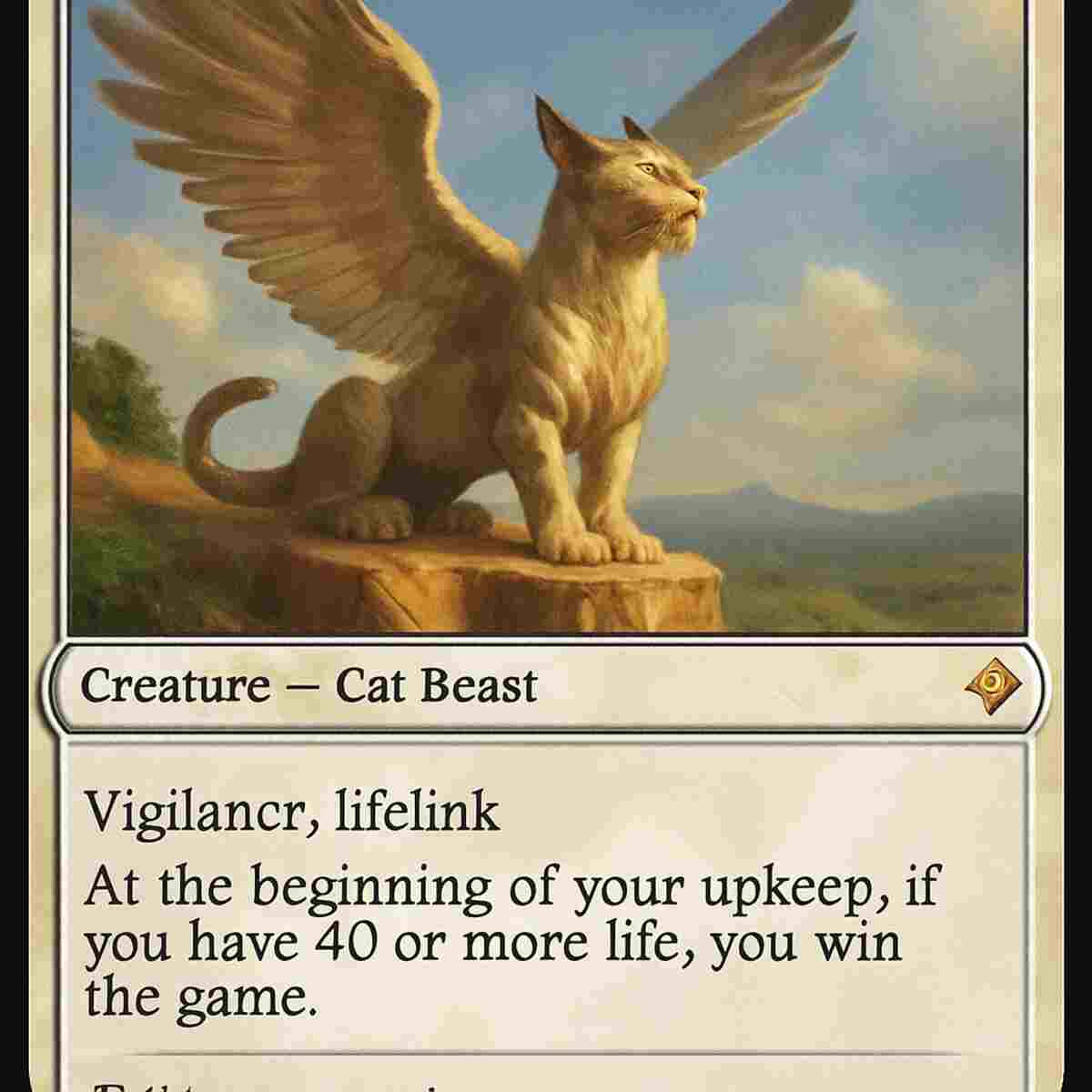
Enter cards that turn this defensive act into a game-winning strategy. A classic example is the majestic Felidar Sovereign. This powerful creature presents a simple, if challenging, deal: if you have 40 or more life at the beginning of your turn, you simply win the game on the spot. That’s it. No final attack, no massive fireball—just a declaration of victory for achieving a state of supreme vitality. Reaching double your starting life is a tall order, but the reward is undeniable.
This concept of winning through sheer resilience appears on other cards, too. Some are creatures like the Sovereign, while others are magical spells that persist on the battlefield, known as enchantments. For instance, the Test of Endurance enchantment offers a similar path, requiring an even higher life total of 50 to win. These cards prove that in the world of Magic, overwhelming power isn’t the only path to triumph; sometimes, being untouchable is its own victory condition. But what if you could win not by hoarding life, but by hoarding treasure?
The Dragon’s Hoard Strategy: Winning by Amassing Treasure
While gaining life feels like building an impenetrable fortress, another path to victory is more like a classic fantasy trope: amassing a giant pile of gold. Instead of hoarding a resource like life points, these cards task you with collecting specific items on the battlefield. If you can gather enough of them, the game is yours.
The card Revel in Riches does exactly this, turning the game into a high-stakes treasure hunt. It sets a new goal: collect ten “Treasure” tokens. Think of these Treasures as physical game pieces created by the spell—in this case, they are a type of magical item known as an artifact. If you begin your turn with ten or more of these shiny tokens under your control, the spell’s condition is met, and you instantly win the game.
But how do you find all that treasure? That’s the most brilliant part of this card’s design. Revel in Riches helps you build your own hoard. Whenever an opponent’s creature dies for any reason, the spell automatically creates a Treasure token for you. So as you defend yourself and your opponent’s forces fall, your pile of gold grows larger and larger, bringing you ever closer to a unique and glittering victory. Collecting treasure is one way to win by building up resources, but some cards take this idea of slow, steady progress to a whole new level.
The Doomsday Clock: How to Win by Building Something Over Time
While collecting treasure feels like a mad dash, some victories are more like a slow, deliberate countdown to an inevitable end. These cards don’t reward you for one big score; instead, they act like a doomsday clock, patiently ticking away turn after turn. Your job is simply to protect the card long enough for it to reach its goal, turning the game into a tense waiting game where your opponent knows exactly what you’re trying to accomplish.
A perfect example is the card Simic Ascendancy. When this spell is on the battlefield, you place “growth counters” on it whenever one of your creatures becomes bigger. Think of these counters as physical markers, like little glass beads, that you place directly on the card to track its progress. The card’s single-minded goal is to accumulate twenty of these counters. If you can protect it and grow your creatures enough to hit that magic number, Simic Ascendancy declares you the winner.
Another card, Mayael’s Aria, takes a similar approach but focuses on a single, champion creature instead of a running tally. It checks for a creature with enormous Power—the stat that determines how much damage it deals in combat. The Aria sets a legendary quest: at the start of your turn, if you control a creature with a Power of 20 or more, you win. This shifts the game from a wide battle to a race to train one Herculean monster, hoping it survives long enough to claim victory.
Both of these strategies prove that victory doesn’t always come from a sudden strike but can be the result of careful, patient nurturing. They require you to build toward a final, game-ending moment. But what if you don’t have to build anything at all? What if a single, perfectly timed spell could fulfill a prophecy and end the game right then and there?
The Prophecy Fulfilled: Can a Single Spell Win the Game?
Instead of slowly building an advantage, some cards that say you win the game in Magic operate more like a self-fulfilling prophecy. They don’t require you to collect treasures or grow a giant monster; their power lies in the very act of being cast. There’s just one catch: you have to do it twice. This creates a thrilling mini-game where you cast a powerful spell once, and then must survive long enough to find and cast it again for the ultimate victory.
A fan-favorite card called Approach of the Second Sun is the perfect example of this. The first time you cast this epic spell from your hand, you gain a bit of life, giving you a much-needed buffer. Then, instead of going to your discard pile, the card does something unique: you shuffle it back into your deck, placing it exactly seven cards from the top. It’s like putting a bookmark deep within a book you know you’ll need to find again soon. Your opponent knows the doomsday clock is ticking.
This design is brilliant because it turns the game into a tense race. You must draw six cards to get back to your prophecy while your opponent does everything they can to stop you. If you manage to survive and cast Approach of the Second Sun a second time, you fulfill its condition and immediately win the game, regardless of life totals or what creatures are on the board. This is one of the most popular and unconventional MTG victory strategies, proving that victory can come from foresight and patience. But what if the goal wasn’t to find a specific card in your deck, but to get rid of the deck entirely?
The Forbidden Knowledge: How to Win by Running Out of Cards
In nearly every game you can think of, running out of resources is a disaster. An army without soldiers, a kingdom without gold, or a hand without cards usually spells defeat. Magic: The Gathering is no different—most of the time. But what if you could turn this fundamental rule of failure into your ultimate path to victory? Some of the game’s most mind-bending cards let you do just that, creating a bizarre and thrilling race to the bottom.
First, a quick explanation. Your deck of cards in Magic is called your “library.” It’s your well of spells, creatures, and power for the entire game. At the beginning of each of your turns, you must draw a new card from it. This is where the game’s built-in doomsday clock comes in: if you have to draw a card but your library is empty, you lose the game on the spot. It represents a wizard running out of spells and ideas.
However, certain cards treat this ultimate failure as a secret win condition. A famous example is the character Jace, Wielder of Mysteries. This powerful wizard has a game-changing ability printed right on the card: if you would try to draw from an empty library, instead of losing, you instantly win the game. He provides a shield against the game’s natural law and then turns it into a weapon.
This simple line of text flips the entire game on its head. Suddenly, your goal is no longer to preserve your resources but to burn through them with reckless abandon. Every card you draw brings you one step closer to triumph. But how do you actually empty a sixty-card library before your opponent simply defeats you the old-fashioned way? It turns out there are two main philosophies for achieving this paradoxical victory: the slow, methodical approach of an oracle, and the reckless, all-or-nothing gambit of a madman.
Two Paths to an Empty Library: The Madman vs. The Oracle
Achieving victory by emptying your own library is a strange and wonderful feat, but the card Jace, Wielder of Mysteries isn’t the only one who knows this secret. The game designers at Magic have explored this idea multiple times, creating different cards that offer their own unique spin on the same goal. The two most famous examples represent two very different philosophies: the reckless gambit of a madman and the certain prophecy of an oracle.
First, there is the Laboratory Maniac. This card embodies the “all or nothing” approach perfectly. Like Jace, it creates a new rule for you: if you would draw a card from an empty library, you win the game instead of losing. The key word here is when. The Maniac has to be on the battlefield, watching and waiting for that moment of crisis. You have to go all the way to the edge, attempt the forbidden draw, and only then does he turn your failure into a spectacular win. It’s a high-wire act that feels like defusing a bomb with one second left on the clock.
In contrast, there is Thassa’s Oracle. This character offers a much safer, more calculated path to the same end. The Oracle’s power doesn’t wait for you to try and draw. Instead, its ability happens the moment it enters the battlefield. If, at that specific instant, your library is empty enough to meet its condition, you just win. There’s no waiting for your next turn, no nail-biting draw step. The Oracle arrives, sees that the future is written (in your empty library), and declares the game over.
This subtle difference in timing is everything. It’s the distinction between a desperate, last-second trick and a perfectly executed plan.
- The Madman: Wins when you try to draw from an empty library.
- The Oracle: Wins before you draw, as soon as it enters the battlefield (if your library is empty enough).
Both cards pursue the same bizarre goal, but they highlight how a tiny change in a card’s wording can create a completely different feeling and strategy. It’s a brilliant example of how Magic can offer players multiple tools—some risky, some safe—to achieve the same impossible task.
The Catch: Why Doesn’t Everyone Use These ‘I Win’ Cards?
After reading about cards that let you bypass the normal rules of combat, a natural question comes to mind: If these cards exist, why isn’t every game of Magic a race to see who can play their “I Win” button first? It seems almost too good to be true, and in a way, it is. The game’s designers have made sure these powerful spells are more like quests than cheat codes, balanced by three major hurdles that make them both fair and incredibly exciting to attempt.
The first and most important balancing act is their price. In Magic, every card costs a certain amount of energy, called “mana,” to play. Simple spells are cheap, but reality-bending ones that can win you the game are intentionally made very expensive. You often have to spend the entire game saving up enough energy just to cast one. This forces a player to decide between playing smaller creatures and spells early or going all-in on a single, game-ending gambit later on. It’s a classic trade-off between short-term advantage and long-term, ultimate power.
Even if you manage to save up enough energy, your opponent gets a vote. Just as you have these amazing spells, your opponent has spells designed to stop you. These “removal” spells can destroy your key cards, like the Laboratory Maniac we discussed, right before you’re about to win. Imagine spending ten turns carefully emptying your library, only to have your Maniac zapped into oblivion a moment before your victory. This constant threat from the other side of the table turns your plan into a nail-biting, high-stakes operation.
This combination of high cost, difficult requirements, and opponent interference is the secret sauce. Winning by emptying your library or reaching a sky-high life total isn’t an easy loophole; it’s a monumental challenge you take on. These cards dare you to play the game in a completely different way, forcing you to defend your plan while surviving everything your opponent throws at you. That’s why successfully winning with one feels so incredible—it’s not a shortcut, but a legendary feat you pulled off against all odds.
Your First Step into a Weirder World of Victory
Before, a game of Magic: The Gathering might have looked like a straightforward fantasy battle—a clash of wizards and monsters until one runs out of health. Now, you can see past the battlefield. You recognize that the game isn’t just about who can land the final blow, but who can solve a hidden puzzle first, turning the board into a canvas for creativity.
You’ve seen the blueprints for these secret victories. The path to winning isn’t always paved with damage. Some of the most creative MTG alternate win conditions reward players for becoming nearly invincible with a high life total, while others grant victory for amassing a dragon’s hoard of treasure. They transform the game into a race to complete a patient ritual or fulfill an ancient prophecy.
This is the true genius behind the game’s design. The next time you see a card or watch a match, look for the text that bends the rules. The most exciting moments aren’t always in the attack, but in the quiet, brilliant assembly of these unconventional MTG victory strategies. The fight is temporary, but the cleverness is forever.
